

What you gain from a clear report
Fixed wiring assessed
We check the condition of circuits, wiring and protective devices.
Codes explained plainly
C1, C2, C3 and FI are set out in terms you can actually use.
Next steps not guesswork
The report helps prioritise any remedial work or further testing.
Expert EICR certificates
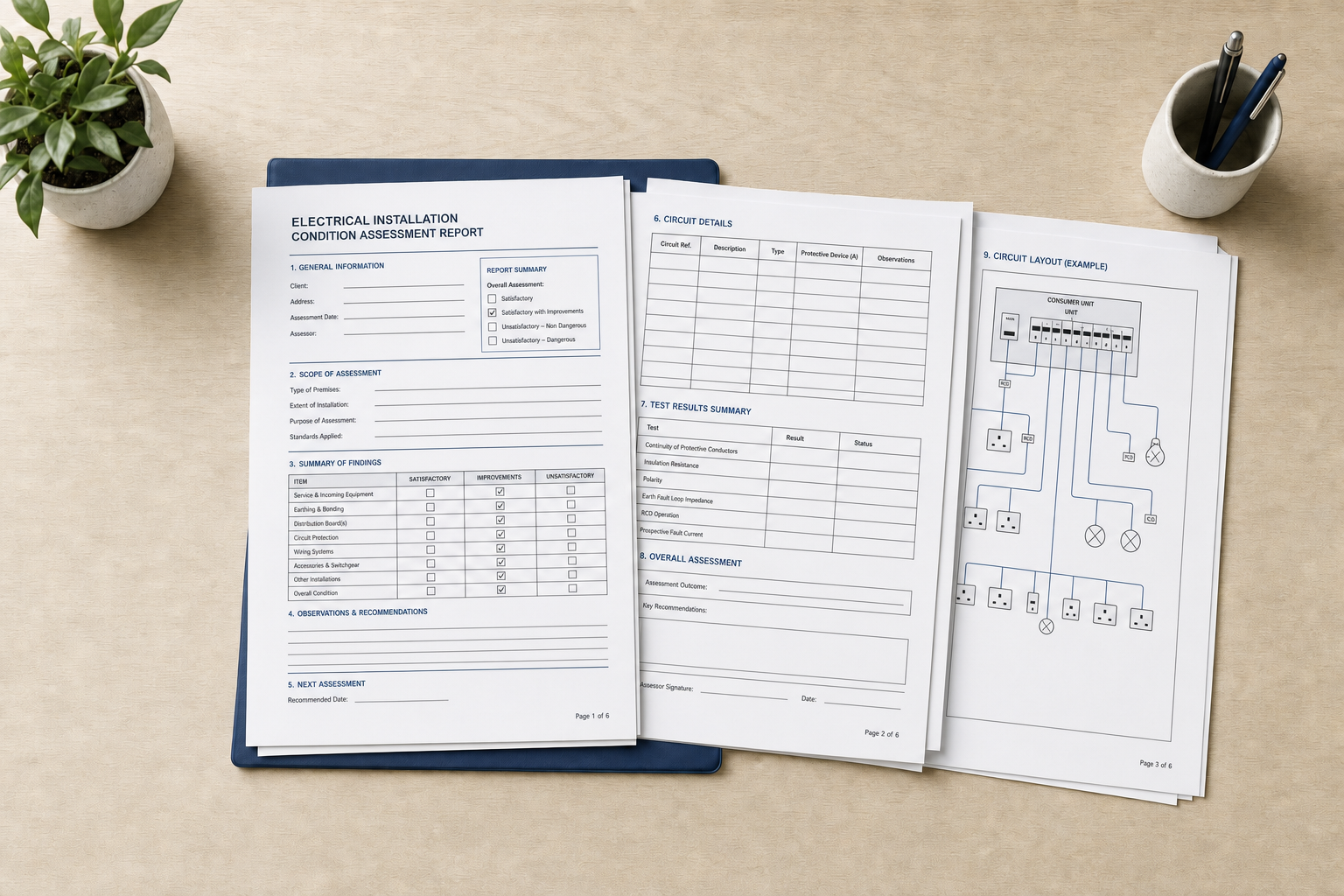
An Electrical Installation Condition Report looks at the safety and condition of the fixed electrical installation, including the wiring, circuits, protective devices and connected accessories. It is useful when a property is ageing, being purchased, rented out or simply due a proper check. We inspect and test the installation with access to the consumer unit and a representative range of circuits and fittings. With Boylan Woods LTD, the aim is not to bury you in technical wording, but to show what the report is assessing and what the findings actually mean for the property.
Landlord EICR certificates made simple
Report observations are usually recorded as C1, C2, C3 or FI, and those codes matter because they shape the overall outcome and the urgency of any next steps. We explain them in clear customer language, then discuss what remedial work or further testing may be needed. Through Boylan Woods LTD, that follow-on work can be prioritised in a sensible order, which is particularly useful when you are dealing with an older installation and need clarity rather than a sheet full of unexplained letters and numbers.
Frequently asked questions
What does an EICR actually examine?
It examines the condition and safety of the fixed electrical installation, including wiring, circuits, protective devices and connected accessories. Access to the consumer unit and a representative selection of circuits and fittings helps us carry out the inspection and testing.
What do the EICR codes mean?
The codes record the type and seriousness of observations found during the inspection. They matter because they affect the report outcome and help show which issues need more urgent attention, which ones need improvement and whether further investigation is required.
What happens if the report finds defects?
We explain the observations, discuss what needs dealing with first and outline any remedial work or further testing that may be sensible. The report is most useful when it leads to clear priorities rather than leaving you unsure what to tackle next.